Tuesday, February 26, 2013

Blowing in the Wind...

Just a few days ago, Cyclone Haruna swept by on the West coast of Madagascar. This is very unusual, most cyclones, hurricanes, and tropical storms take place on the East coast.

Man-made disaster?
We happened to be on the West coast of Madagascar, in Morondava - more than 200 km above the eye of the storm. The cyclone, impressive as it was, did not do much damage there, but in Tulear it created massive flooding. It killed 13 people and affected over 17.000 poor souls. Not so much because of the winds themselves but because of a dyke which... had not been maintained for years. Sadly, that is how natural disasters become man-made ones...

Lot of rain in paradise
Stranded
Stranded during this unexpected beach vacation, we heard 150 km winds hauling over our 5-star beach bungalows. The horizontal rains gushed under our doors. The swimming pool turned into a wave pool. But our hotel had taken precautions and no major damage was done. Air Madagascar cancelled all flights and let us wait three more days in windy beach paradise. Every day we'd walk the Morondave strip, 80% of its restaurants and hotels closed.


Sardine tins
The winds, still strong on Saturday, brought great pleasure to the children. Armed with: an empty sardine tin, four plastic bottle tops, and a plastic bag they held amazing car races that would make John Travolta long back to Grease! The T-birds against the Scorpions!


Watch the T-birds against the Scorpions on the Morondava strip:


Enjoy this little movie! I'm sure it will make you smile...and isn't that what we need after this horrendous Haruna?


Monday, February 11, 2013

Cyclo Pousse

Had to try it out....
After my adventure at the silk worm farm, I visited the Cyclo Pousse Project in Anstirabe, another UNDP  project. A cyclopousse is a pousse pousse but with a bicycle. So instead of running their legs from underneath their body (to freely use a Dutch expression), the drivers can cycle their passengers around. It's less labor-intensive, and can earn more income. Win-win, right?

Zidane and Ronaldo
In 2008, Zinedine Zidane and Ronaldo donated 80.000 USD to Madagascar.  The two football vedettes are UNDP good-will Ambassadors, a bit like the Angelinas of the UNDP, so to say.  The money had to be used to fight poverty, and mean something to young people. The Cylco Pousse Project was born.


Proud owners of cyclo pousses
Dream come true
In Madagascar most pousse-pousses are not owned by their drivers. They are rented for a small daily fee (2000 to 3000 Ariary). Their chauffeurs do not earn much from them. With this project, drivers  are leasing their bikes from a facility, called Le Parc, for 2.500 Ariary per day. Regular market price but with one difference: after having leased it for 14 months, the drivers have become the owner. For most of them, owning the thing is a dream come true...

Rare commodity
The great thing about this little project is that it is still running, two years after UNDP has ended its support.  The Parc is still operational. It is actually making modest profits, and new bikes are being produced and leased out. The drivers have formed an association and they're benefiting from a life and accident insurance. Their income has doubled or tripled. A sweet example of a sustainable project. This may sound obvious, but sustainability is a rare commodity in development land.

Ingredients
So what were the 'secrets' of this successful project? Nothing special, it is just a project that came at the right time, to the right place. The pousse pousse driver beneficiaries were involved in its conception, as were local authorities and the mayor. There was a market for the (more expensive but faster) cyclo-pousse services, and the bikes were produced locally, from simple materials, easy to maintain. The president of the association is a great guy with modern ideas.

Evaluation terminology
There you have it. In our evaluation terminology we'd say that the project is relevant, demand-driven and market oriented. It is effectively managed, with adequate beneficiary participation and sufficient stakeholder consultation. It makes use of appropriate, cost-effective technologies and its set-up is sustainable.

Denis in front of his new house, built with money earned with  his Cycle Pousse 

So, thank you Zidane and Ronaldo, and if you ever make it to this great island, do give us a ring!


Tuesday, January 22, 2013

For kings and dead people - but what has Rumpelstiltskin have to do with it?

Madagascar is a country that will never cease to amaze me. I believe that after two and half years, I may have discovered 2% of all the secrets and treasures this country has to offer.

On a field visit trip I recently did for UNDP, I am taken to see a small project financed by this United Nations agency. We drive for about three hours on bumpy roads, arrive at a farmer's house, made of mud and clay with a court yard. The farmer, followed by half the village, leads us into some sort of barn, and I'm thinking: Ha, another pig rearing project. Or chickens maybe?

No way! It was a silk worm farm with a weaving installation.

Originally destined for Kings and (rich) dead bodies only, silk is now more and more available in Madagascar, though it's still pretty rare and expensive.

When you're wearing a silk shawl, you may want to remind yourself of the extremely labor intensive process that you've wrapped around your neck. Want to know more? Here's some Silk-For-Dummies steps:

1. Grow and groom your silk worms

Madagascar silk larvae are pretty difficult little creatures. They do not like: humidity, noise, strong smells, pesticides and parasites, in particular ants, flees and flies. I'm not sure about lemurs and chameleons. Grooming them is almost a full time job. They do like: feuilles de murier (mulberry leaves). One missed feeding can kill them all! So one has to look after the leaves too.

Sensitive little buggers they are!

2. Harvesting silk cocoons and unwinding the threat

The entire process from silkworm egg to cocoon takes about twenty-five days. That is 25 days of full time care.

At the moment the demand for silk cocoons exceeds the offer
Several cocoons will be left alone to let the moths come out to lay new eggs. Each cocoon consists of many meters of silk threat, but how to get it off? The bulk of the cocoons are boiled to kill the chrysalis and to soften them before extracting the long, strong silky threat which is rolled onto a reel. This too is a long and demanding process.

3. Dye (not die!) 

Red, yellow and orange seem to be the favorites
Malagasy silk makers use mostly natural coloring, from hibiscus and acacia flowers to color the yarn, but also artifical coloring powders.

4. Spin it


Like Sleeping Beauty and Rumpelstiltskin (who?), people still use spinning wheels (when they're not eating).

5. Weave it

Check out this simpel yet complicated-looking loom. This is obviously a labor intensive process involving much skill.

Artisanal weaving machine (loom)

6. Wear it!

Voila, so I learned the steps involved in silk making. Now you know too.
Madagascar silk is smooth like cashmere and soft like a baby rabit's skin! Had to buy some - you should too!


No longer just for Kings and dead people!
See more on this topic

www.Madasilk.com
www.soie-madagascar.com
http://kololandyblog.blogspot.com/2012/06/pourquoi-la-soie-de-madagascar-coute-t.html

Monday, December 31, 2012

Baobabs unharmed

A little while ago I wrote about the bush fires that 'destroyed' some of the Allee the Baobab, one of Madagascar's fantastic natural monuments. I had posted a devestating picture that appeared in a leading newspaper l'Express Madagascar.

I then received reactions that the newspaper picture was photoshopped, that the giants were unharmed and that it was all some sort of stupid political game.

On our recent trip to Morondava, I can confirm that the beautiful giants are doing well and that they're as stunning as they've been... for the past 700 or so years.

Of course I gave them a long big fat hug...in case another clown comes up with a stupid idea and sets real fire to them...


Sunday, December 23, 2012

Tratra Ny Krismasy

As a language lover, I am always delighted to find foreign words in a language. Of course there are quite a few French words in the Malagasy language. But while distributing toys and candies in a few remote villages this week, I was surprised to hear the word Krismasy over and over...

It almost felt like being in a snowy Christmas setting, except that the snow was rain, Father Chrismas wore a Jester hat and Santa's little was my Soleine wearing a purple rain coat!


Giving (if you can) is more rewarding than receiving...
On On to bring Krismasy gifts and joy!


No snow but lots of red earth mud!

Santa's little helper
Surprise! Will this baby wake up happy? Or scared shitless...?

In any case, we wish you all a joyful and generous Krismasy!


Tuesday, December 11, 2012

Zie ginds komt de stoomboot...

Yonder See the Steamboat Coming (free translation :-). Every year millions of Dutch children are singing this traditional Dutch Saint Nicholas song, their little hearts beating with anticipation....

In Holland we believe in the holy Saint Nicholas, patron of the children. He arrives from Spain in our small county by steamboat. Don't ask me why. He celebrates his birthday on December 5th, and that is when the children get gifts and sweets... if they have been good all year, because Sint knows and sees everything.

A few days before the big day of December 5th, children put their shoe in front of the chimney to get some sweets.  Saint Nicholas is always accompanied by Zwarte Pieten (Black Peters) who enter the homes through the chimney, hence their blackness.

This week our own Saint Nicholas arrived in Madagascar....not by steam boat but in a Zebu cart, but we kept singing Steamboat anyway... ha ha...

Steamboat??? 

As I child I fiercely believed in all this. All children do, until the age of 6 or 7. Soleine is now 8, and I had to tell her that Sinterklaas in Madagascar is not the real one, because Antoine was going to be Zwarte Piet. But most children want to believe so hard, that they refuse to give up. Soleine still believes in the real Saint and she put her shoe several times.

Not easy to be Zwarte Piet in the heat

Vol verwachting klopt ons hart
Soleine (8) is no longer afraid of Saint Nicholas

Tuesday, November 27, 2012

Baobabs on Fire!!

Bush fires are a huge problem in Madagascar. People have all kinds of reasons to set fire to land: to clear it for agriculture, to burn useless weeds and make room for french new graze, or to produce charcoal.

A major disaster struck last weekend: the stunning Allee de Baobab in Morondava, has been victim to wild fire. It took five hours to discover the fire, and many many more to kill it. Local people tried, but all they had was plastic water cans and branches. There is no proper fire brigade.

Seeing this picture brought tears to my eyes. Some of these trees are over 800 years old!


NOW WE KNOW THIS PHOTO HAS BEEN PHOTOSHOPPED! SHAME! 

Natural monument of Madagascar before the fire

So if you see a Baobab or any other big old beautiful tree, give it a big, fat, long hug, you never know for how long it will be there for!

Tree hugging is good for you...and for the trees!

Sunday, November 18, 2012

What do you mean, carrots are orange?

A Belgian guy asked me once: Susanne, do you know why carrots are orange? He insisted that I, especially should know the answer to this question.

I had never thought about this. To me it's like: why are bananas crooked? A fact, a given from mother nature.

But is it, really?

Every two weeks I order a basket (called Sobika) full of fresh, organically grown, healthy vegetables from Ferme Ivato. It takes me one minute to click on three online buttons, et voila...on Tuesdays the Sobika is develired to our house for 15,000 Ariary (4,50 euro) - what a pleasure.

It's always a bit of a surprise to see what is in it. Look what I found last week:

Purple carrots from La Ferme d'Ivato

Of course this made me think of the question why carrots are orange? After some googling I found out that the first orange carrots emerged in the Netherlands in the 17th century. Dutch cultivators had developed a new strain containing high amounts of beta-carotene. Why? In honor of the Dutch Royal Family and William of Orange!!

So now I know why I should have known...

For those who don't believe me: pay a visit to the carrot museum in Belgium. Yes, that is also true!

Oh and for those in Tana, http://www.lafermedivato.com/

This week's Surprise Sobika

Wednesday, November 7, 2012

Crying Trees

Red dresses under violet tree
"Purple rain...purple rain"...this Prince song has suddenly gotten new meaning for me. Also, a wheeping tree is no longer a willow to me. What I am talking about? About one of the world's most stunning trees: the Jacaranda!

It's spring time and Tana and the elegant purple Jacaranda trees are everywhere. If you're looking up you see an explosion of color - violet flowers against a clear blue sky. On the ground, hunderds of lavender petals covering red earth, or green gras.

There's not a cloud in the sky, and yet...and yet...when walking underneath the Jacarandas you feel large droplets of water... splattering on your face, your arms, on the ground...

Huh?

Well, everybody in Madagascar knows this... Jacaranda trees cry!!

I wonder why on earth such a pretty tree is crying...
It must be tears of joy!


Explosion of color

Big fat drop on my arm...

Tears of joy?

Jacarandas in Tana. Walk under these and you really get wet!

No, seriously...what makes these trees 'cry' is a cicada-type insect called Jorery in Malgache. They too are fond of the pretty Jacaranda. They absorb water and while sitting in the tree, they pee it out.

So. they're actually peeing trees!

Friday, October 26, 2012

A lot of letters

It never ceases to amaze me how long words are in Malagasy language. Take the names of places. If you want to be able to read a village name, you have to literally stop your car to read the sign. There's no way one can absorb so many letters while driving by... unless you know the 'secret'.

It is actually quite simple, if you know a few basic words in Malagasy. For example:

Nouns:
Tanana         Houses / village
Ambato         Rock
Ambohi         Hill (from: votrahitra)
Ala                Forest
Nosy             Island
Rano             Water
Tani               Land

Adjectives:
Mora             Easy / calm
Be                 Big
Kely              Small
Arivo             Thousand / many
Tsangana      Standing Up / elevated
Mahitsy         Straight
Mena             Red
Fotsy             White
Manga           Blue

Voila, now you can start combining. For example:

Ambatobe                 Big Rock
Ambatofotsy             White Rock
Analamahitsy            Straight Trees
Antananarivo            Many many houses
Analakely                  Small forest
Antanimena               Red Land
Antanifotsy               White Land
Menabe                     Big Red
Ambatomistangana    Elevated Rock
Analamanga               Blue Forest
Ambohimanga            Blue Hill
Ambohimangakely      Little Blue Hill
Morarano                   Calm water
Nosy Be                     Big Island

So what does this one mean?


Monday, October 1, 2012

Tough Stuff


The social enterprise Tough Stuff produces solar powered solutions for those who live without electricity. In Madagascar that means 90% of the households, including many in the cities.

The company's Chief Technical guy is a Dutch guy named Adriaan Mol (not the one from the children's books :-) who used to live in Madagascar.

I puchased the litlle light recently, to try it out. It comes with a small solar pad to be put in the sun for 8 hours, et voila...free power.

They say the Tough Stuff is 'incassable', indistructable Had to see that for myself. So...
  1. we tried to break it with a hammer
  2. I rolled over it with my car
  3. I made a serious effort to drown it. 
And guess what?


It's true! After being mistreated for an entire morning, Tough Stuff keeps shining like never before. 


Took a while to convince our gardener...but he tried!


A scratch on the back is the only damage.

Tyre marks still on it...


Drown baby, drown...


Rise and shine!

P.s. I recently bought a Nixon Coolpix AW 100 that is supposed to be waterproof, shock proof, bush proof, freezeproof, sandproof. I am tempted.


Wednesday, September 19, 2012

More strange creatures


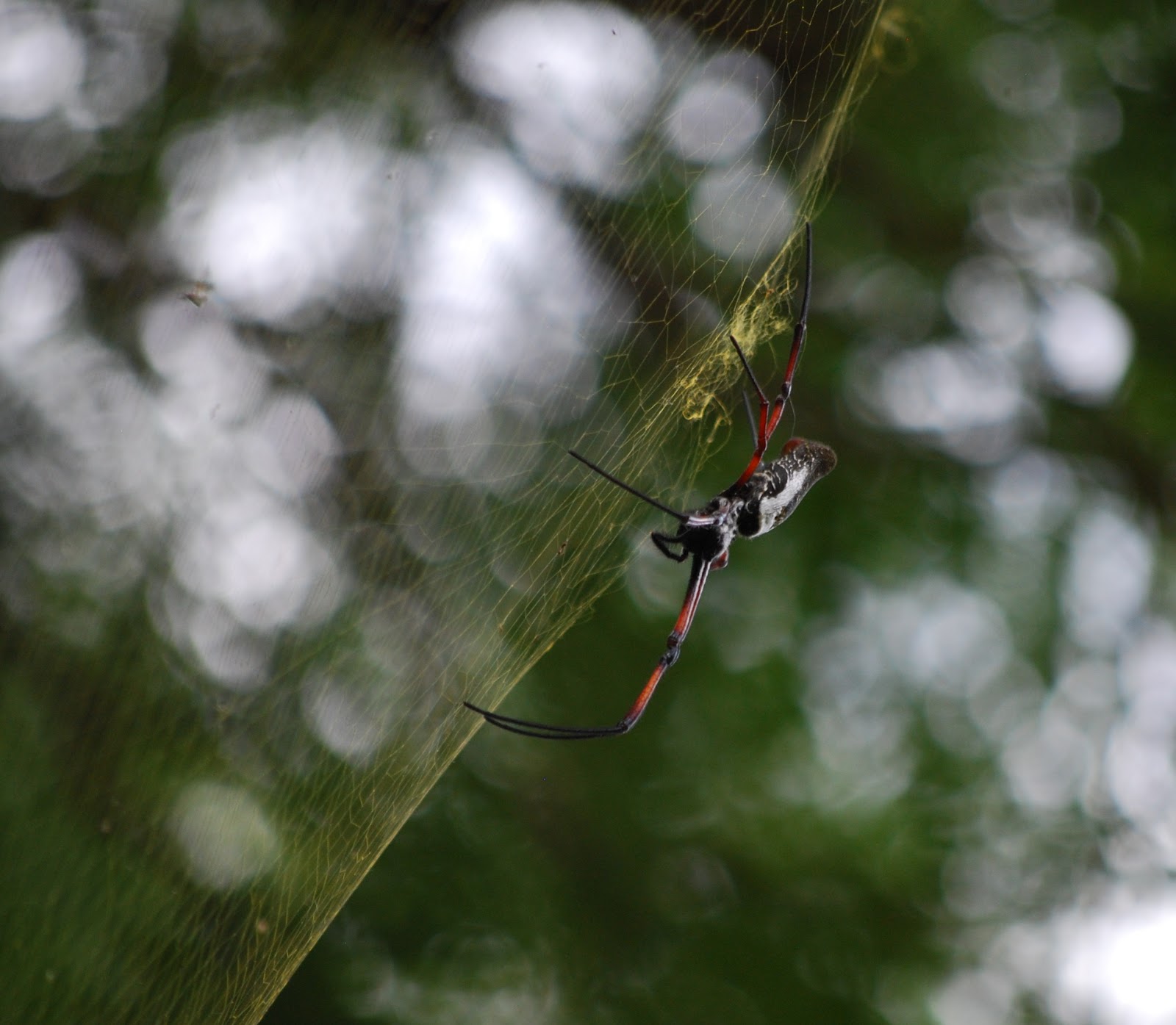
Olivier, especially for you...more bugs I photographed in Madagascar. Any ideas?

Hey handsome...with you pretty colors!

I find this one particularly gross...and on our kitchen floor!
Inchy winchy in his yellow web...
Come out, come out ...whatever you are!
last but not least:

Wiggley: which end is head and which is tail?

Moth in pretty cloth...bigger than my two hands!
Rupsje Nooitgenoeg